
 By Mlungisi Shabalala, 20 August 2026
According to the latest update by the International Research Institute for Climate and Society (20th July 2026), the El Niño Southern Oscillation (ENSO) is currently in an El Niño state. Sea surface temperatures (SST) in the Central Pacific Ocean have been rising rapidly between April and July 2026, and these observations indicate that El Niño conditions continue to intensify, with a strong likelihood for the event to evolve towards a very strong El Niño. Probabilistic climate projections show a high likelihood (100% chance) for the El Niño conditions to prevail throughout the upcoming spring and summer seasons.
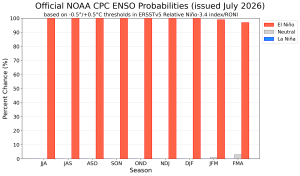
Figure 1: Latest ENSO predictions. Source: CPC.
Current water resource Status in uMngeni-uThukela Water’s (UUW) operational area
Similar to the previous update, particular focus is placed on the South Coast region, which has consistently received below-average rainfall since May 2025 (i.e. rainfall has been below-average for 13 of the last 15 months). This region is supplied predominantly through relatively small dams, which are characterised by rapid response to changing weather conditions. Although the Mhlabatshane and Nungwane Dams received above-average rainfall in July, the impact is insignificant in volume as normal winter rainfall is close to 0 mm in this region.
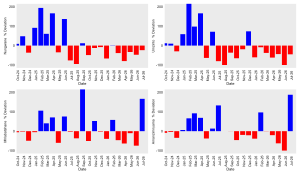
Figure 1: South Coast rainfall deviation from long-term averages (October 2024 to July 2026).
The impact of the below-average rainfall on the South Coast dams is shown in the table below, through a comparison of the change in storage level between 01 May and 01 August. In contrast to 2025, where all dams remained full throughout the winter season, a rapid decline in storage levels has been observed during the early parts of the 2026 winter. The storage level of the Amanzamnyama Dam, which supplies Harding and surrounding areas, has dropped by a drastic 30%, from 77% in May to 47% at the end of July 2026. The storage level of Umzinto and EJ Smith Dams, which supply Umzinto and its surrounds, has declined by 21% and 23% respectively, with the EJ Smith Dam at 68% of its Full Supply Level by the end of July. Similarly, the storage level the Nungwane Dam, which supplies Amanzimtoti, has declined by 19% between May and July 2026.
Table 1: Comparison of change in South Coast Dam levels between May and August 2025 vs 2026.
| 2026 | 2025 | |||
| Site Name | 01 May 2026 (%) | 01 Aug 2026 (%) | 01 May 2025 (%) | 01 Aug 2025 (%) |
| South Coast System | ||||
| Nungwane Dam | 100.3 | 81.5 | 101.8 | 101.0 |
| Umzinto Dam | 99.1 | 78.1 | 100.5 | 100.2 |
| E.J. Smith Dam | 91.2 | 68.2 | 101.1 | 100.0 |
| Mhlabatshane Dam | 96.1 | 87.5 | 103.5 | 100.9 |
| Amanzamyama Dam | 77.2 | 46.9 | 100.0 | 99.0 |
El Niño is associated with dry and hot conditions, which, if prolonged, may lead to drought conditions. Thus, the latest ENSO forecast suggesting El Niño conditions to prevail throughout the summer season necessitates the need to closely monitor the state of water resources against potential drought development. Droughts often result in several socioeconomic impacts, including, amongst others, water supply shortages, famine and disease. The observed decline in dam storage levels, combined with the potential development of drought conditions, poses a water security risk for KwaZulu-Natal, particularly the South Coast region.
Water users are urged to play an active role towards the protection and conservation of the limited resource, particularly during this period of relatively low storage levels. A proactive approach will ensure that Day Zero is avoided in uMngeni-uThukela Water’s operational area. uMngeni-uThukela Water will provide the next update in September.